If you have never seen the masterpiece that is The Room, you need to do so as soon as possible. I'm not exaggerating when I say it's one of my top ten movies of all time, but if you're unfamiliar with it, the reasoning might surprise you.
The Room is a 2003 film written, directed, produced by and starring Tommy Wiseau. It's a story of friendship, love and betrayal - and it's hands down one of the absolute worst movies I've ever seen. Everything about it is just wrong, from the dialogue to the editing to the acting; there is nothing about this movie that was done right and it's amazing. Think of the greatest movie directors of all time: your Hitchcocks, your Spielbergs, your Kubricks, so on. Now imagine all of them teaching a class on how not to make a movie. Add in an extra dose of weirdness and you have The Room.
The movie has a cult following similar to the one around The Rocky Horror Picture Show, only with less dancing and more throwing spoons. Ever since the movie came out and gathered this following, its fans have been wondering: how could this even happen? How did this movie get made? Who even is Tommy Wiseau? Unfortunately for everyone, Wiseau is an extremely secretive, extremely private man; any questions about himself that he feels probe too deeply (such as "where are you from?" and "how old are you?"), he dodges, giving nonsense answers, ignoring the question or ending the interview immediately.
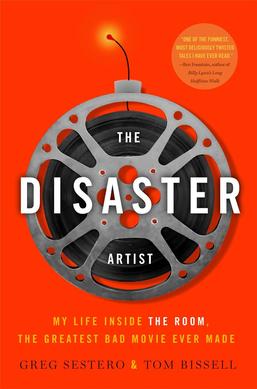
Lucky for us, we have Greg Sestero, the actor who played Mark in The Room and Wiseau's best friend. And sometimes only friend. Most of the time, actually. If anyone can shed some light on the mystery that is Tommy Wiseau, it's Sestero and in his memoir, a book called The Disaster Artist, he does not disappoint.
Sestero alternates chapters between telling the story of his friendship with Wiseau and telling about the chaos that was the process of filming The Room. While I was more interested in stories from the film set, just because I wanted to know how on earth that thing even got made, the chapters on Wiseau and Sestero's relationship shed some light on the mystery surrounding the man and the movie. Where we had only the image of Tommy Wiseau that he himself had presented to the public, Sestero adds details that prove that Tommy's real portrait is not all that different from the caricature we'd previously seen. Related example: in the late 1990s, when the two first met, Wiseau had an oil portrait of himself hanging prominently on a wall in his San Francisco apartment. It's unclear if that portrait is still there today.
It gets weirder. In the very beginning, Sestero describes a dinner spent with Wiseau and the outfit Tommy wore not only that night but every night, featuring two belts, "one in the belt loops and one draped down in back to cup Tommy's backside, which was, he always claimed, the point. 'It keeps my ass up. Plus it feels good.'"
Later, Sestero tells of the first time he saw Wiseau act, in a class taught by a woman named Jean Shelton:
Sestero's descriptions of his memories are vivid and written in an extremely accessible way. I know that he had a co-author help him on this project, but what I don't know is how much of the book was written by each person. I choose to believe that Sestero wrote my favorite passages and phrases himself. If I'm wrong, don't tell me. I want to believe.
The book confirms that, yes, Tommy Wiseau is just as weird, mysterious, paranoid and otherwise eccentric as any Room fan has ever imagined. But Sestero doesn't just limit himself to portraying his friend as the strange hermit with a funny accent and questionable grasp on the English language that we've seen in the movie. Rather, in recounting their friendship, he shows different facets of Wiseau's personality, both good and bad, and fleshes him out, turning him from a character to a real person. Late in the book, he even gives us the proper Tommy Wiseau backstory we've all been hoping and waiting for since The Room became the cult phenomenon it is today. How much of it is true is up for debate - this is Tommy Wiseau we're talking about; he has a reputation for lying about things he doesn't want to talk about or acknowledge - but it's something, at least, and that's all we hoped for.
The Disaster Artist is wonderfully written and, personally, I found it hard to put down. It's equal parts hilarious and poignant, with each story of set insanity or general weirdness countered by a moment of seriousness or something that can make you feel sorry for Wiseau. I highly recommend it to any fan of The Room, both for entertainment value and for enlightenment. It's a deeply, deeply weird ride - but what else can you expect from Tommy Wiseau?
NEXT UP: I bought and read the prologue of Bioshock: Rapture by John Shirley last week because I've been going through serious Rapture withdrawals lately, but I also checked out In Cold Blood by Truman Capote from the library and it's due back in three weeks so by virtue of not getting to keep that one, I'll probably read it first. No telling, though.
It gets weirder. In the very beginning, Sestero describes a dinner spent with Wiseau and the outfit Tommy wore not only that night but every night, featuring two belts, "one in the belt loops and one draped down in back to cup Tommy's backside, which was, he always claimed, the point. 'It keeps my ass up. Plus it feels good.'"
Later, Sestero tells of the first time he saw Wiseau act, in a class taught by a woman named Jean Shelton:
"And what are you doing for us, Thomas?"The second instance of Wiseau's performing was equally so, if not more:
"No, not Thomas. It's Tommy."
Bored already, Shelton scratched her nose. "What are you doing for us, Tommy?"
"The Shakespeare, Sonnet 116."
I heard someone mutter, "Oh no, not this again."
I was watching Shelton very closely now. We all were. "Proceed," she said.
"Let me not to the marriage of true minds," he began, "admit impediments." He bludgeoned his way through the rest, each line a mortal enemy. Where the sonnet demanded clear speech, he mumbled; where it asked for music, he went singsong. Everything he said was obviously the product of diligent mismemorization, totally divorced from the emotion the words were trying to communicate. He was terrible, reckless, and mesmerizing.
[The next] night would be the pirate's final performance with his current scene partner. They'd decided to do a scene from A Streetcar Named Desire. I had no doubt which scene they'd chosen.His script writing is on the same level:
Cut to: Pirate Guy in a white tank top, his wild hair in a ponytail, wandering around stage left, crying out "Stella!" many more times than the script called for and occasionally breaking into exaggerated sobs. He wasn't even bothering to direct his agony toward his partner, the intended focus of the scene. He was just launching his performance out into space.
The pirate's scene partner valiantly tried to bring him around with the smelling salts of actual lines from the script, but he kept yelling over her, "Stella! Stella!" until he went to his knees, covered his face with his hands, cried for a moment, and finished with a final and piercingly wrong "STELLA!"
Everyone in that basement studio knew they had just witnessed one of the most beautifully, chaotically wrong performances they would ever see.
This day's particular scene...had Lisa admitting to Claudette that she was - in the words of Tommy's original script - "doing sex" with someone else. Also in the original script, this scene opens with Lisa answering the phone to talk to her mother. While writing the scene, Tommy forgot, at some point, that Lisa was on the phone, so he ends the scene with Lisa walking her mother to the door and saying good-bye. It's the most wonderfully surreal thing I've ever read.There's quote upon quote like this throughout the book and even more with words from Wiseau himself on acting, movies, life in general and vampires. Yes, vampires.
Sestero's descriptions of his memories are vivid and written in an extremely accessible way. I know that he had a co-author help him on this project, but what I don't know is how much of the book was written by each person. I choose to believe that Sestero wrote my favorite passages and phrases himself. If I'm wrong, don't tell me. I want to believe.
The book confirms that, yes, Tommy Wiseau is just as weird, mysterious, paranoid and otherwise eccentric as any Room fan has ever imagined. But Sestero doesn't just limit himself to portraying his friend as the strange hermit with a funny accent and questionable grasp on the English language that we've seen in the movie. Rather, in recounting their friendship, he shows different facets of Wiseau's personality, both good and bad, and fleshes him out, turning him from a character to a real person. Late in the book, he even gives us the proper Tommy Wiseau backstory we've all been hoping and waiting for since The Room became the cult phenomenon it is today. How much of it is true is up for debate - this is Tommy Wiseau we're talking about; he has a reputation for lying about things he doesn't want to talk about or acknowledge - but it's something, at least, and that's all we hoped for.
The Disaster Artist is wonderfully written and, personally, I found it hard to put down. It's equal parts hilarious and poignant, with each story of set insanity or general weirdness countered by a moment of seriousness or something that can make you feel sorry for Wiseau. I highly recommend it to any fan of The Room, both for entertainment value and for enlightenment. It's a deeply, deeply weird ride - but what else can you expect from Tommy Wiseau?
NEXT UP: I bought and read the prologue of Bioshock: Rapture by John Shirley last week because I've been going through serious Rapture withdrawals lately, but I also checked out In Cold Blood by Truman Capote from the library and it's due back in three weeks so by virtue of not getting to keep that one, I'll probably read it first. No telling, though.

No comments:
Post a Comment